Summary

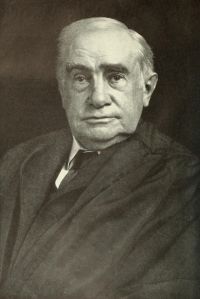
Portrait of Henry Billings Brown Henry Billings Brown United States v. Barber (140 U.S. 164…

It is usual and proper to require that persons offering themselves as sureties for the appearance of the accused in court shall justify to their pecuniary responsibility, and the expense of their so doing stands upon the same footing as the recognizance itself. It is true that the taking of recognizance or bail for appearance is primarily for the benefit of the defendant, and in civil cases it is usual to require the costs of entering into such recognizances to be paid by the defendant or other person offering himself as surety.
Source: Wikisource

Portrait of Henry Billings Brown Henry Billings Brown United States v. Barber (140 U.S. 164…

But in criminal cases it is for the interest of the public as well as the accused that the latter should not be detained in custody prior to his trial, if the government can be assured of his presence at that time; and, as these persons usually belong to the poorest class of people, to require them to pay the cost of their recognizances would generally result in their being detained in jail at the expense of the government, while their families would be deprived, in many instances, of their assistance and support.
Source: Wikisource

Portrait of Henry Billings Brown Henry Billings Brown United States v. Barber (140 U.S. 164…

Section 828 allows 'for filing and entering every declaration, plea, or other paper, ten cents.' Each deposition is not necessarily a 'paper,' within the meaning of this clause. If two or more depositions are embraced in a single paper, or a series of sheets are attached together, they form but a single paper, within the meaning of the law.
Source: Wikisource

Get perspective with Kwize: daily news enlightened by great literature