Summary

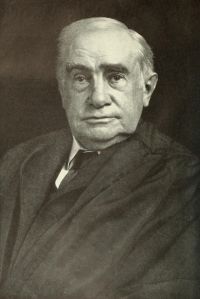
Portrait of Henry Billings Brown Henry Billings Brown Dennison v. United States — Opinion of the Court

It is true that the chief supervisor is entitled to exercise a certain discretion as to what papers he shall enter upon a permanent book, but to enter a hundred letters, each of which must be substantially a copy of every other, excepting the address, is so manifestly an abuse of his discretion that no court should tolerate it for a moment.
Source: Wikisource

Portrait of Henry Billings Brown Henry Billings Brown Dennison v. United States — Opinion of the Court

The offices to be filled are purely temporary, and as soon as the election is held and the reports made the supervisors are functi officio. The office of the applications is even more temporary than that of the supervisors, since as soon as the appointments are made the applications have served the purpose for which they were intended. To speak of them as the official records of the chief supervisor is to dignify them with a title and importance entirely foreign to their real functions.
Source: Wikisource

Portrait of Henry Billings Brown Henry Billings Brown Dennison v. United States — Opinion of the Court

It is not for us to determine what are the records which should be entered and indexed. It is sufficient to say that, for the purposes of this case, we have no difficulty in determining what are not.
The plea of res judicata, arising from the fact that the claimant brought an action in 1887 in the court of claims to recover for various items of service of the same nature and description as those claimed in this case, and that the court found in his favor and rendered judgment against the United States for the amount claimed, is not well taken.
Source: Wikisource

Get perspective with Kwize: daily news enlightened by great literature