Summary

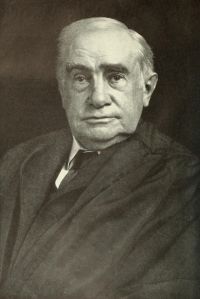
Portrait of Henry Billings Brown Henry Billings Brown Walsh v. Columbus Hocking Valley Athens Railroad Company…

Canals, at that time, embodied the most advanced theories upon the subject of internal transportation. Congress annexed as a condition to the grant that the canals built by its aid should, 'when completed or used, be and forever remain public highways for the use of the government.' Counsel for the defendant insists that, under the terms of the proviso, the obligation to maintain these canals as public highways existed only so long as they were used as such, and this was evidently the opinion of the supreme court of Ohio.
Source: Wikisource

Portrait of Henry Billings Brown Henry Billings Brown Walsh v. Columbus Hocking Valley Athens Railroad Company…

The only contract in this case was between the state of Ohio and the United States. Plaintiff was neither party nor privy to such contract. It was within the power of the government to prosecute the state for a breach of it, or to condone such breach, if it saw fit. As it adopted the latter course, and has deemed it proper to acquiesce in the abandonment of the canals and in the state turning them over to the railroad company, it does not lie in the mouth of the plaintiff to complain. This disposes of every question called to our attention in the briefs of counsel.
Source: Wikisource

Get perspective with Kwize: daily news enlightened by great literature