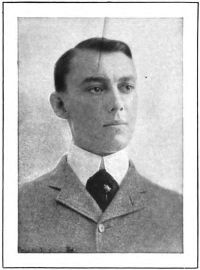
Henry C. Rowland

Henry C. Rowland

Summary

Portrait of Henry C. Rowland Henry C. Rowland The Under-World — Chapter 3 (1911)

Edith listened with her smooth brows knit. I did not mention what Léontine had said about a thief being always a thief, because I knew in my heart that this did not apply to me. I had been a criminal, but not a weak man. Whenever I have committed a crime it has always been of my own deliberate intention and not the result of temptation. To my way of thinking the man who wants to be honest and then falls, in spite of himself, is not a thief. He is not worthy of the name of a thief. He is merely a weakling.
Source: Wikisource

Portrait of Henry C. Rowland Henry C. Rowland The Under-World — Chapter 3 (1911)

Miss Dalghren turned to me with a smile, just as Léontine and Kharkoff, walking their horses, came upon us. As I looked up I caught a glimpse of Léontine's face. It had gone as black as a thunder-cloud. She raised her crop and brought it down with a Vicious cut on the ribs of her hunter, which sprang ahead, almost striking the car,
They swept past and Miss Dalghren looked at me, her eyes big with surprise.
“Did you see that?” she cried. “I wonder why she did it? And her face was furious.”
Source: Wikisource

Portrait of Henry C. Rowland Henry C. Rowland The Under-World — Chapter 3 (1911)

The more I thought of this, the more I became convinced that the disposition of jewels stolen by the mob was Léontine's work. Léontine was undoubtedly the fence. Being under the protectorship of Kharkoff, who was fabulously rich, she might be expected to have valuable jewels, and these she might also be expected to dispose of, for various reasons common to women of her position. Her words to me at Bagatelle crossed my mind: “I am a thief on a bigger scale than you ever dreamed of.” There was little doubt in my mind that at the present moment Léontine had Miss Dalghren's pearls.
Source: Wikisource

Get perspective with Kwize: daily news enlightened by great literature