Summary

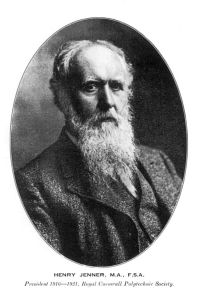
Portrait of Henry Jenner Henry Jenner Dictionary of National Biography… (1892)

Angus Macaulay in his ‘History of Claybrook,’ 1791, says that Jenner ‘had a fine taste for music, and his society was much courted by amateurs of that art,’ and according to Nichols's ‘Literary Anecdotes’ he was ‘a good singer of catches and performer at concerts.’ He composed and published a song entitled ‘The Syren,’ and in his novel ‘The Placid Man,’ and other of his writings, showed much knowledge of music and musical literature.
Source: Wikisource

Portrait of Henry Jenner Henry Jenner Dictionary of National Biography… (1892)

In 1691, when the Act of Indemnity was passed, Jenner was excepted from its provisions, but no proceedings were then taken against him. In Norember 1691 one of his sons was given into the custody of a messenger of parliament for circulating libels against the right of 'their majesties' (i.e. the Prince and Princess of Orange) to the crown. Thereupon the father was charged with having levied fines in James's reign to the amount of 3,000l. on dissenters without returning the money into court. Jenner pleaded the 'general pardon' from King James, which had been stolen
Source: Wikisource

Portrait of Henry Jenner Henry Jenner Dictionary of National Biography… (1892)

Early in January 1688-9 he and his fellow-prisoners were committed to the Tower, 'being charged with subverting the protestant religion and the laws and liberties of the kingdom.' Shortly after they were admitted to bail, but when the Convention parliament voted that Jenner 'had a principal concern in the arbitrary proceedings of the late reign,' he was committed to the custody of the sergeant-at-arms. He was released when parliament was prorogued in January 1690.
Source: Wikisource

Get perspective with Kwize: daily news enlightened by great literature