Summary

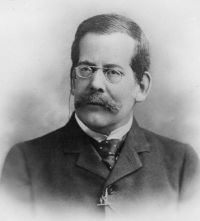
Portrait of Henry Sweet Henry Sweet 1911 Encyclopædia Britannica, Volume 28… (1911)

It gets rid of the German word-order and the irregularities of German grammar, but it is often impossible to understand a Volapük text without thinking in German. The following is a specimen of the language:—
Löfob kemenis valik vola lolik, patiko etis pekulivöl, kels konfidoms Volapüke, as bale medas gletikün netasfetana.
“I love all my fellow-creatures of the whole world, especially those cultivated (ones) who believe in Volapük as (being) one of the greatest means of nation-binding.”
Source: Wikisource

Portrait of Henry Sweet Henry Sweet 1911 Encyclopædia Britannica, Volume 28… (1911)

The history of Volapük has an interest greater than that of the language itself. It has proved (1) that people in general are ready to adopt an artificial language, and (2) that an artificial language is easier to learn than any national language, and supplies an efficient means of communication between those who have no other language in common.
Source: Wikisource

Portrait of Henry Sweet Henry Sweet 1911 Encyclopædia Britannica, Volume 28… (1911)

Volapük had no special philological merits to recommend it; yet, after a few years’ incubation in south Germany, it spread, first to France (about 1885) and then in a few years over the whole civilized world, so that in 1889, when the third Volapük congress met at Paris, there were 283 Volapük societies all over the world, and the total number of Volapük students was estimated at over a million.
Source: Wikisource

Get perspective with Kwize: daily news enlightened by great literature