Summary

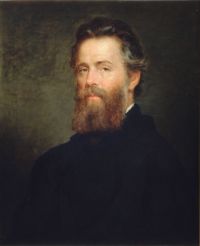
Portrait of Herman Melville Herman Melville Mardi — Volume II/Chapter XLVII: Babbalanja Philosophizes… (1849)

Fill up, Mohi; wash down wine with wine. Your cup, Babbalanja; any lees?"
"Plenty, my lord; we philosophers come to the lees very soon."
"Flood them over, then; but cease not discoursing; thanks be to the gods, your mortal palates and tongues can both wag together; fill up, I say, Babbalanja; you are no philosopher, if you stop at the tenth cup; endurance is the test of philosophy all Mardi over; drink, I say, and make us wise by precept and example.—Proceed, Yoomy, you look as if you had something to say."
Source: Wikisource

Portrait of Herman Melville Herman Melville Mardi — Volume II/Chapter XLVII: Babbalanja Philosophizes… (1849)

Traitor, I'll stand by this to the last gasp, you are inebriated, Babbalanja."
"Perhaps so, my lord; but I was treating of the imagination, may it please you."
"My lord," added Mohi, "of the unical, and rudimental fundament of things, you remember."
"Ah! there's none of them sober; proceed, proceed, Azzageddi!"
"My lord waves his hand like a banner," murmured Yoomy.
"Without imagination, I say, an armless man, born, blind, could not be made to believe, that he had a head of hair, since he could neither see it, nor feel it, nor has hair any feeling of itself."
Source: Wikisource

Portrait of Herman Melville Herman Melville Mardi — Volume II/Chapter XLVII: Babbalanja Philosophizes… (1849)

I say that, to me, all Mardi exists by virtue of my sovereign pleasure; and when I die, the universe will perish with me."
"Come you of a long-lived race," said Mohi, "one free from apoplexies? I have many little things to accomplish yet, and would not be left in the lurch."
"Heed him not, Babbalanja," said Media. "Dip your beak again, my eagle, and soar."
"Let us be eagles, then, indeed, my lord: eagle-like, let us look at this red wine without blinking; let us grow solemn, not boisterous, with good cheer."
Source: Wikisource

Get perspective with Kwize: daily news enlightened by great literature