Summary

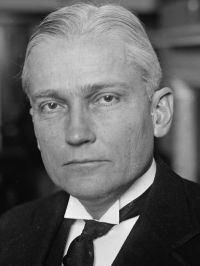
Portrait of Hiram Bingham Hiram Bingham Inca Land: Explorations in the Highlands of Peru

How came it that so large a city as Piquillacta could have been built on the slopes of a mountain which has no running streams? Has the climate changed so much since those days? If so, how is it that the surrounding region is still the populous part of southern Peru? It is inconceivable that so large a city could have been built and occupied on a plateau four hundred feet above the nearest water unless there was some way of providing it other than the arduous one of bringing every drop up the hill on the backs of men and llamas.
Source: Gutenberg

Portrait of Hiram Bingham Hiram Bingham Inca Land: Explorations in the Highlands of Peru

There are high mountains on either side, covered with dense jungle and dark green foliage, in pleasing contrast to the light green of the fields of waving sugar cane. The valley is steep, the road is very winding, and the torrent of the Vilcabamba roars loudly, even in July. What it must be like in February, the rainy season, we could only surmise. About two leagues above Paltaybamba, at or near the spot called by Raimondi “Maracnyoc,” an “abandoned tampu,” we came to some old stone walls, the ruins of a place now called Huayara or “Hoyara.”
Source: Gutenberg

Portrait of Hiram Bingham Hiram Bingham Inca Land: Explorations in the Highlands of Peru

Here, concealed in a canyon of remarkable grandeur, protected by art and nature, these consecrated women gradually passed away, leaving no known descendants, nor any records other than the masonry walls and artifacts to be described in another volume. Whoever they were, whatever name be finally assigned to this site by future historians, of this I feel sure—that few romances can ever surpass that of the granite citadel on top of the beetling precipices of Machu Picchu, the crown of Inca Land.
Source: Gutenberg

Get perspective with Kwize: daily news enlightened by great literature