Summary

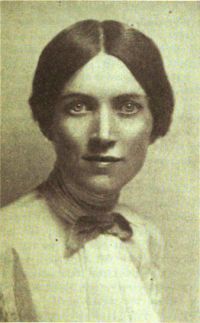
Portrait of Honoré Willsie Honoré Willsie Lydia of the Pines — XV. The Investigation Begins (1917)

Billy put out his hand, solemnly, and the two shook hands. For all Billy was four years older than Lydia, they both were very, very young. So young that they believed that they could fight single-handed the whole world of intrigue and greed in which their little community was set. So young that they trembled and were filled with awe at the vast importance of their own dreams. And yet, futile as they may seem, it is on young decisions such as these that the race creeps upward!
Source: Wikisource

Portrait of Honoré Willsie Honoré Willsie Lydia of the Pines — XV. The Investigation Begins (1917)

For clearly as though the pine had put it into words, something said to Lydia that it was not her business to decide whether or not the Indians deserved to live. It was her business to recognize that in their method of killing the Indians, the whites had been utterly dishonorable. That her refusing to take a stand could not exonerate them. History would not fail to record the black fact against her race that, a free people, the boasted vanguard of human liberty, Americans had first made a race dependent, then by fraud and faithlessness, by cruelty and debauchery, were utterly destroying it.
Source: Wikisource

Portrait of Honoré Willsie Honoré Willsie Lydia of the Pines — XV. The Investigation Begins (1917)

Both the young men were in flannels and hatless, and lolled on the grass at Lydia's feet, as she sat with her back against a tree. She noticed how Kent was all grace, and ease, while Billy, whose face had lately become thinner, was all gaunt angles.
"I'm willing to take the blame, if necessary," said Billy.
Kent sat up with sudden energy. "Look here, if it once got round town that you're the father of this, you'll be run out of Lake City."
Billy laughed. "Oh, no I won't! All you respectable citizens have got too many troubles of your own."
Source: Wikisource

Get perspective with Kwize: daily news enlightened by great literature