Summary

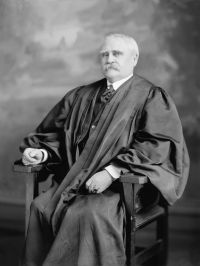
Portrait of Horace Harmon Lurton Horace Harmon Lurton Arredondo v. Arredondo — Opinion of the Court

Shortly stated, the construction placed upon this section is, that the word 'parties' is not used collectively, meaning all of the litigants on the one side or the other, but is intended as if the word 'litigants' had been used, and that the words 'or either of them' mean 'any of them,' and that the jurisdiction conferred embraces all controversies in which any litigant on either side is a citizen of the United States or a subject of a foreign country.
Source: Wikisource

Portrait of Horace Harmon Lurton Horace Harmon Lurton Arredondo v. Arredondo — Opinion of the Court

That the bill was subsequently amended so as to confer jurisdiction against Cuebas as a sole defendant, by dismissing the bill against the other two defendants, and striking out the prayer of the bill that any and every claim, interest, or encumbrance be forever barred and cut off, did not justify a decree based upon the order pro confesso made prior thereto. Upon such amendment being made, so completely changing the character of the bill, creating a jurisdiction which had not theretofore existed, the court should have set aside the default and given time to defend.
Source: Wikisource

Portrait of Horace Harmon Lurton Horace Harmon Lurton Arredondo v. Arredondo — Opinion of the Court

The sole complainant was a citizen of Porto Rico, and Cuebas was a citizen of the United States, and therefore subject to be sued in that court by the complainant, if the citizenship of the other persons on the same side was such as not to defeat jurisdiction. But that was not the case. One of them, Francisco Antongiorgi, was alleged in the bill to be a citizen of the island of Porto Rico. The other defendant, the bank, was averred to be a corporation organized under the laws of Spain, and a citizen thereof.
Source: Wikisource

Get perspective with Kwize: daily news enlightened by great literature