Summary

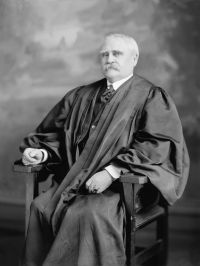
Portrait of Horace Harmon Lurton Horace Harmon Lurton Wells Fargo Company v. Neiman-Marcus Company…

The court of civil appeals, while not in express terms denying the validity of such a stipulation limiting recovery, did so in effect, for it seems to have placed its judgment of affirmance upon the rule requiring the company's agents to ask the shipper to declare the value, and if no value is stated, that the package should be stamped, 'Value asked and not given.' This was not done.
Source: Wikisource

Portrait of Horace Harmon Lurton Horace Harmon Lurton Wells Fargo Company v. Neiman-Marcus Company…

It is undoubtedly true that the principal defense upon which the defendants seem to have relied in the state court was, that by intentional misrepresentation the plaintiff had obtained a rate based upon a valuation of $50, and that they had thereby secured transportation of the property for which they sue at a less rate than that named in the tariffs published and filed by the carrier, as required by the acts of Congress regulating commerce, and thus obtained an illegal advantage and caused an illegal discrimination forbidden by the acts referred to.
Source: Wikisource

Portrait of Horace Harmon Lurton Horace Harmon Lurton Wells Fargo Company v. Neiman-Marcus Company…

But the shipper, in accepting the receipt reciting that the company 'is not to be held liable beyond the sum of $50, at not exceeding which sum said property is hereby valued, unless a different value is hereinabove stated,' did declare and represent that the value did not exceed that sum, and did obtain a rate which he is to be assumed to have known was based upon that as the actual value. There is no substantial distinction between a value stated upon inquiry, and one agreed upon or declared voluntarily.
Source: Wikisource

Get perspective with Kwize: daily news enlightened by great literature