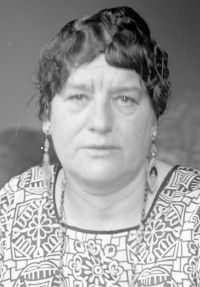
Inez Haynes Gillmore

Inez Haynes Gillmore

Summary

Portrait of Inez Haynes Gillmore Inez Haynes Gillmore The Homeliest Child (1911)

She knows, of course, what a handicap her disfigurement is. We've tried to tell her that it is not beauty that counts in this world—only character, that beauty is only skin-deep—oh, you know the lies with which the world comforts ugliness." There was a sudden passion of revolt in Miss Ladd's voice. Mrs. Thornton nodded with a quick, curt sympathy. "And Ellen really tries to be content. She is a good child. Time after time she's trotted out for visitors, her heart full of hope, but nobody ever has even considered her.
Source: Wikisource

Portrait of Inez Haynes Gillmore Inez Haynes Gillmore The Homeliest Child (1911)

Babies little and babies big, babies fat and babies thin, babies with curly hair, babies with straight hair, babies with no hair at all, babies pretty and babies plain, babies solemn and babies gay, babies black-eyed and brown, babies blue-eyed and gray, they gazed at the visitor in varying degrees of unwinking wonder, and then, with the nonchalance of childhood, went on with their play.
Source: Wikisource

Portrait of Inez Haynes Gillmore Inez Haynes Gillmore The Homeliest Child (1911)

She came out of it as stirred by another electric shock. Again it was little Ellen. The child had seated herself in a corner. She, too, nursed a baby on her lap, was lulling it to sleep. This time her eyes were not fixed on Mrs. Thornton. They rested on the Prettiest Baby. And they shone with a wistful envy, entirely lacking in rancor.
"Oh, Prettiest Baby," they seemed to say. "I'm glad for you—I truly am. But, oh, how I wish I were like you!"
The gaze of the Homeliest Child came back to her own little charge. She pressed her disfigured cheek against the warm, rosy, baby face.
Source: Wikisource

Get perspective with Kwize: daily news enlightened by great literature