Summary

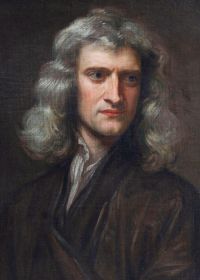
Portrait of Isaac Newton Isaac Newton Observations upon the Prophecies of Daniel… (1733)

I know that Epiphanius tells us, if some interpret his words rightly, that the Jews used a vicious cycle, and thereby anticipated the legal new moons by two days. But this surely he spake not as a witness, for he neither understood Astronomy nor Rabbinical learning, but as arguing from his erroneous hypothesis about the time of the passion. For the Jews did not anticipate, but postpone their months: they thought it lawful to begin their months a day later than the first appearance of the new moon, because the new moon continued for more days than one
Source: Wikisource

Portrait of Isaac Newton Isaac Newton Observations upon the Prophecies of Daniel… (1733)

For the same reason the years 31 and 35 are excluded, because in them the Passion cannot fall on friday, without making it three days after the full moon, or four days before it: errors so enormous, that they would be very conspicuous in the heavens to every vulgar eye. The year 36 is contended for by few or none, and both this and the year 35 may be thus excluded.
Tiberius in the beginning of his reign made Valerius Gratus President of Judea; and after 11 years, substituted Pontius Pilate, who governed 10 years.
Source: Wikisource

Portrait of Isaac Newton Isaac Newton Observations upon the Prophecies of Daniel… (1733)

The next day, in allusion to the servants who by reason of the sabbatical year were newly set free, he said, If ye continue in my word, the truth shall make you free. Which the Jews understanding literally with respect to the present manumission of servants, answered, We be Abraham's seed, and were never in bondage to any man: how sayeth thou, ye shall be made free? John viii. They assert their freedom by a double argument: first, because they were the seed of Abraham, and therefore newly made free, had they been ever in bondage
Source: Wikisource

Get perspective with Kwize: daily news enlightened by great literature