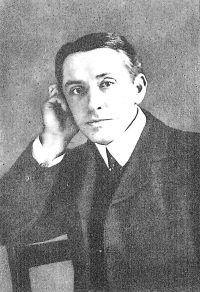
J. S. Fletcher

J. S. Fletcher

Summary

Portrait of J. S. Fletcher J. S. Fletcher,  The Copper Box — Chapter 11 (1923)

“ Whether the mystery was going to be done with next day or not, its atmosphere was still thick upon us next morning. At ten o’clock, Parslewe, who invariably made all his arrangements without consulting anybody who was affected by them, marshalled us into a carriage and pair at the door of the Crown and gave some instructions, aside, to the coachman. We drove off into a singularly picturesque and well-wooded country. Madrasia, fresh from the almost treeless slopes of the Cheviots, was immediately in raptures with it. ”
Source: Wikisource

Portrait of J. S. Fletcher J. S. Fletcher,  The Copper Box — Chapter 11 (1923)

“ But I never heard your name, sir.”
Parslewe nodded, and remarking that there was no need to show us round, he’d prefer to be left to himself, led us into the hall and up a great staircase to the state apartments. It was evident at once that he knew the whole place, and for the next hour he was in his element as guide while we were lost in wonder and admiration at the things he showed us. And we were examining the very bed on which Queen Elizabeth had stretched her limbs when the housekeeper came in, more interested in Parslewe than ever.
”
Source: Wikisource

Portrait of J. S. Fletcher J. S. Fletcher,  The Copper Box — Chapter 11 (1923)

“ Motioning to the coachman to follow him up the road, Parslewe walked on ahead with his companion, and presently turned into a wayside wood. Coming abreast of the bridle-gate by which they had entered, we saw them in conversation with a third man, also elderly, who was felling trees; for some minutes the three stood talking together.
“What is he after now?” asked Madrasia.
I shook my head—nothing was going to draw me into speculations about Parslewe’s proceedings.
“The best thing at the present juncture,” said I, as oracularly as possible, “is just to let things occur.
”
Source: Wikisource

Get perspective with Kwize: daily news enlightened by great literature