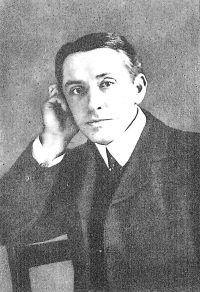
J. S. Fletcher

J. S. Fletcher

Summary

Portrait of J. S. Fletcher J. S. Fletcher The Spoils to the Victor (1910)

He was now nearly sixty, a hale, hearty man, the biggest and cleverest farmer in those parts, rich, respected, made much of by the great folk, looked up to by the little; a man of influence and power. He was going down into the valley of life under a fine sunset and soft evening airs, and there were few who did not envy him a prosperous career and the prospect of a green old age. But Martin Nelthorp had always carried a trouble, a rankling sorrow in his breast, and he was thinking of it as he sat staring with sombre eyes at the dull red glare of the sullen cinders in the grate.
Source: Wikisource

Portrait of J. S. Fletcher J. S. Fletcher The Spoils to the Victor (1910)

The only enemy he had ever known, the only man he had ever had cause to hate with a bitter, undying hatred, was now by the decrees of destiny, by the whirling of fortune’s wheel, brought within his power. If he pleased, he, Martin Nelthorp, could ruin Richard Sutton, could turn him out of the old place in which the Suttons had lived for generations, could sell every yard of land, every stick of furniture that he possessed, could leave him and his—beggars.
Source: Wikisource

Portrait of J. S. Fletcher J. S. Fletcher The Spoils to the Victor (1910)

Martin Nelthorp walked up and down his fold and his stack-yard for some time, staring persistently at the stars. Though he did not say so to himself, he knew that that astute old attorney, Postlethwaite, was right when he said that old wounds rankle. He knew, too, that however much a man may strive to put away the thought from himself, there is still enough of the primitive savage left in all of us to make revenge sweet.
Source: Wikisource

Get perspective with Kwize: daily news enlightened by great literature