Summary

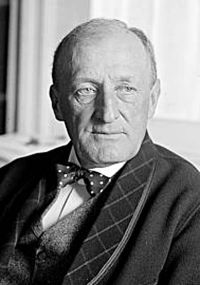
Portrait of James Clark McReynolds James Clark McReynolds Charles Ramsay Company v. Associated Bill Posters…

Advertising by posters has become common, and in most of the larger cities and towns throughout this country and Canada one or more local concerns follow the business of displaying them. Usually advertisers contract with a lithographer directly or through agents (solicitors) , such as plaintiffs, for the manufacture or purchase of posters, and with the local billposter for displaying them. Often the lithographer does business in a different state from the advertiser and both operate in different states from those where most of the billboards are located.
Source: Wikisource

Portrait of James Clark McReynolds James Clark McReynolds Charles Ramsay Company v. Associated Bill Posters…

There the holding was that the rules, regulations and practices of the association directly affected local business only. The purpose of the combination here challenged is to destroy competition and secure a monopoly by limiting and restricting commerce in posters to channels dictated by the confederates, to exclude from such trade the undesired, including the plaintiffs, and to enrich the members by demanding noncompetitive prices.
Source: Wikisource

Portrait of James Clark McReynolds James Clark McReynolds Charles Ramsay Company v. Associated Bill Posters…

The association's membership has become large, its powers and influence great, while the number of independent billposters has greatly declined, and it is now practically impossible for an advertiser to utilize posters except by employing members of the association and upon terms arbitrarily fixed. Advertisers are not permitted to purchase 'stock' posters, unless willing to have them displayed upon boards of members, and independent billposters cannot purchase such matter at all.
Source: Wikisource

Get perspective with Kwize: daily news enlightened by great literature