Summary

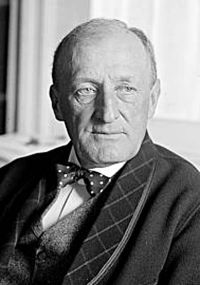
Portrait of James Clark McReynolds James Clark McReynolds McMicking v. Schields — Opinion of the Court

The refusal of the time in which to prepare for trial, and the consequent forcing of the defendant to his defense on the instant, is, under the provisions of our law, equivalent, in our judgment, to a refusal of a legal hearing. It amounts in effect to a denial of a trial. It is an abrogation of that due process of law which is the country's embodied procedure, without which a defendant has, in law, no trial at law. . . . Nobody has denied the initial jurisdiction of the trial court.
Source: Wikisource

Portrait of James Clark McReynolds James Clark McReynolds McMicking v. Schields — Opinion of the Court

The denial to the accused of a constitutional right does one of two things,-it either ousts the court of jurisdiction to enter a judgment of conviction, or it deprives the record of all legal virtue, and a judgment of conviction entered thereon is a nullity, it having nothing to support it. . . . He applied for a writ of habeas corpus upon the ground that the judgment was void as a matter of law, as he had been convicted without due process of law.
Source: Wikisource

Portrait of James Clark McReynolds James Clark McReynolds McMicking v. Schields — Opinion of the Court

The law does not require a vain and useless thing, and the provision in question must be construed as applying to cases where a new complaint is filed in this court. But aside from this, we think that the time of trial caused no prejudice to the accused. As we have seen, the complaint was filed on December 1st, and the accused had more than three weeks to prepare before the trial in this court. During this period there were evidently one or more continuances, and finally, it seems, the defendant had to be called into the municipal court by a bench warrant.
Source: Wikisource

Get perspective with Kwize: daily news enlightened by great literature