Summary

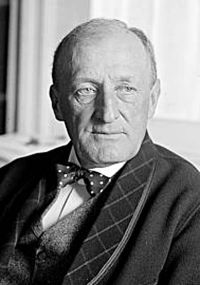
Portrait of James Clark McReynolds James Clark McReynolds Williams v. Vreeland — Opinion of the Court

When defendant in error signed blank powers of attorney she did not know what her husband had done, and certainly entertained no purpose to approve transfer of the certificates to herself. She thought she was merely doing something to enable him to correct his avowed mistake and nothing else. Nobody was misled or put in a worse position as the result of her act. 'As between the original parties that could not be deemed a ratification which was accompanied by a refusal to ratify and a declared purpose to undo the unauthorized act.
Source: Wikisource

Portrait of James Clark McReynolds James Clark McReynolds Williams v. Vreeland — Opinion of the Court

It was denied her under representations and influences which, when she acted, led her to believe she was doing something entirely different from that which she was actually doing; that is, she was made to believe she was correcting a mistake of her husband, a mistake affecting his affairs, not that she was dealing with or assigning away her own property.
Source: Wikisource

Portrait of James Clark McReynolds James Clark McReynolds Williams v. Vreeland — Opinion of the Court

Ct. 566, 39 L. Ed. 654, is not a submission to the court without the intervention of a jury, within the intent of Rev. Stat. §§ 649, 700 (Comp. St. §§ 1587, 1668) , but is equivalent to a joint request for a finding of fact by the court, and when the court, acting upon such request, directs the jury to find for one of the parties, both are concluded on its finding. In this case the parties submitted to the court the question of the wife's ratification of her husband's unauthorized act; that question was one of fact; upon it depended her liability.
Source: Wikisource

Get perspective with Kwize: daily news enlightened by great literature