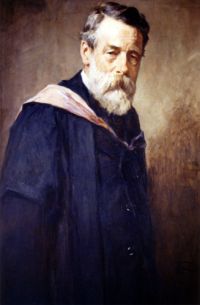
James Leigh Strachan-Davidson

James Leigh Strachan-Davidson

Summary

Portrait of James Leigh Strachan-Davidson James Leigh Strachan-Davidson Cicero And The Fall Of The Roman Republic… (1894)

Cicero has much to say of the duties of a statesman, but he seems blind to the faults in the machinery of government. His methods of reasoning are those of the Greek philosophers, his conclusions those of a Roman statesman with all a Roman's limitations. The experience of the world has silently worked out the problem which the greatest men of antiquity could not solve. Cæsar and Cicero were the "least mortal minds" of Republican Rome, yet neither of them conceived it as possible, that not only a free city could be organised but a free nation.
Source: Wikisource

Portrait of James Leigh Strachan-Davidson James Leigh Strachan-Davidson Cicero And The Fall Of The Roman Republic… (1894)

Though he is thus appreciative of Cæsar's personal charm, which blinds him for the moment to the dangers which the commonwealth has to fear from him, it must not be supposed that Cicero does not feel Oct., 54 B.C. keenly the destruction of his old ideals. "We have lost, my dear Atticus, not only the blood and substance but the very outward hue and complexion of the State as it used to be. There is no Republic left which can give me any pleasure or on which my eye can rest with satisfaction.
Source: Wikisource

Portrait of James Leigh Strachan-Davidson James Leigh Strachan-Davidson Cicero And The Fall Of The Roman Republic… (1894)

Cicero is more successful when he tells the story of his personal relations with Cæsar, and justifies his full reconciliation. Their early friendship, Cæsar's flattering offers of alliance when consul, his co-operation with Pompey in Cicero's restoration,—all authorise him to forget and forgive, even if he has some grievances to complain of in the matter of his exile. [17] Above all, is he not bound to lay aside private resentments when recommending what is for the good of the State? Cæsar is no lounger the turbulent demagogue of the capital, but the champion of the Roman State
Source: Wikisource

Get perspective with Kwize: daily news enlightened by great literature