Summary

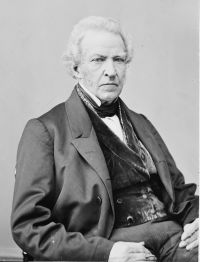
Portrait of James Moore Wayne James Moore Wayne Fretz v. Bull — Opinion of the Court

Now, if according to his own declaration, the collision occurred but a moment after, before he can be excused for his near approach to the flatboat, he must show that there was not water-room, and of sufficient depth, to have run the Memphis further off than he did, and that there was not, on either side of the flatboat, a sufficient width of water for him to have passed the flatboat at a distance greater than the length of the Memphis, for it is plain, if that had been done, whether the eddy turned the flatboat or not, that the two boats could not have come into collision.
Source: Wikisource

Portrait of James Moore Wayne James Moore Wayne Fretz v. Bull — Opinion of the Court

A moment before this, no one could have supposed a collision possible, but just about the time the bow of the Memphis passed the flatboat, she being then a considerable distance to the left of the course of the Memphis, a sudden change in the current of the eddy, or some other cause unknown to these respondents, threw the said flatboat against the larboard wheel-house of the Memphis, nearly bow foremost, which started one of the planks of her bow, causing her soon to fill with water and sink.
Source: Wikisource

Portrait of James Moore Wayne James Moore Wayne Fretz v. Bull — Opinion of the Court

The evidence on the part of the respondents, confirms this view of the case; for Galusha says, that at the time of the collision, there was room enough for the Memphis to pass without interfering with the flatboat at all: and Thomas testifies, that the flatboat was floating with the current, and the steamboat running with the stream, and though that at the place of accident, there was an eddy on both sides of the river, that the river was very high and broad, and the Memphis might have passed on either side and thereby prevented the accident.
Source: Wikisource

Get perspective with Kwize: daily news enlightened by great literature