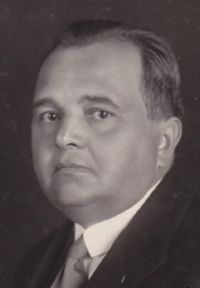
Jan Branberger

Jan Branberger

Summary

Portrait of Jan Branberger Jan Branberger Bohemia's claim for freedom (1915)

The unquestioned merits of his many and varied works warrant his recognition as the founder of the modern Bohemian School of Composition. Smetana's heir, as a worthy representative of the purely Slavonic in musical composition, was Antonin Dvorak, whose name is well known in England, where his fame is acknowledged by the frequent performance of many of his best works by the principal choral and orchestral societies.
Dvorak's start in life was very humble; he had more difficulties to overcome in the pursuit of education than the majority even of music's least favoured sons.
Source: Wikisource

Portrait of Jan Branberger Jan Branberger Bohemia's claim for freedom (1915)

In the seventeenth century the use of instrumental music in churches became more general, and Bohemians were to be found in every country where good instrumentalists were in demand. The style of Bohemian music in the eighteenth century has a strongly marked national character both in the melodies and their harmonic treatment, as shown in the compositions of the masters of counterpoint.
Source: Wikisource

Portrait of Jan Branberger Jan Branberger Bohemia's claim for freedom (1915)

Josef Suk, on the contrary, has a disposition for classic originals, compositions remarkable for their brilliant harmonic colouring as well as the flow of melody, reminding us strongly of the style of Dvorak.
The theory and history of the art has a growing literature to which have contributed Professor Otakar Hostinsky, Karel Stecker Eman. Chvala, and Karel Knittl. The Prague Conservatoire of Music, the first academy of music established in Austria, will soon complete its first century of beneficial work.
Source: Wikisource

Get perspective with Kwize: daily news enlightened by great literature