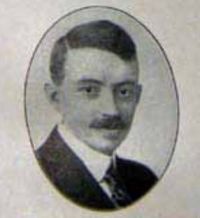
Jaroslav František Smetánka

Jaroslav František Smetánka

Summary

Portrait of Jaroslav František Smetánka Jaroslav František Smetánka The Czechoslovaks in the United States (1920)

There are many rural and urban communities with a considerable Czech population which is entirely unchurched, and these people may now be and should be reached by our regular American churches, as language is no longer a barrier.
The Jan Hus Presbyterian Church of New York City has rendered a unique service to our American culture by the preservation and cultivation of the arts and music of the Czechoslovak people, so that the distinctive gifts of these people may not be lost upon their amalgamation in our American life.
Source: Wikisource

Portrait of Jaroslav František Smetánka Jaroslav František Smetánka The Czechoslovaks in the United States (1920)

There have always been among the immigrants many young men with an adventurous spirit, but the mass of the Czechoslovak immigrants crossed the ocean because of the economic opportunity which America presented to the poor peasant. Slovak immigration on a larger scale began about forty years ago and was especially strong in the ten years preceding the war.
The Czech immigrants of the third quarter of the nineteenth century settled for the most part on farms.
Source: Wikisource

Portrait of Jaroslav František Smetánka Jaroslav František Smetánka The Czechoslovaks in the United States (1920)

The reason for this is that Czechs and Slovaks, though close neighbors, have lived a separate life for nearly a thousand years. The Czechs had for centuries their own kingdom of Bohemia, until in the 17th century they were merged with the Austrian possessions of the House of Hapsburg, while the Slovaks were a part of the kingdom of Hungary and lived under the sway of Magyar landholders.
Source: Wikisource

Get perspective with Kwize: daily news enlightened by great literature