Summary

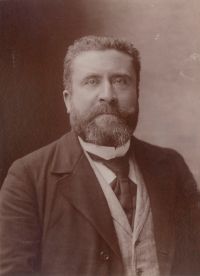
Portrait of Jean Jaurès Jean Jaurès Studies in Socialism — VII. Some Sayings of Liebknecht (1906)

How shall Socialism be put into practice? This work gives proof of an indomitable courage in its author, because it was at the very moment when the régime of the state of siege and Bismarck's still undiminished power were weighing most heavily on the Socialist party, that Liebknecht asked himself, not whether Socialism would triumph, but how it would triumph.
Source: Wikisource

Portrait of Jean Jaurès Jean Jaurès Studies in Socialism — VII. Some Sayings of Liebknecht (1906)

Liebknecht supposed that Bismarck personified not only the danger but the strength of the Empire. Once Bismarck fallen, he imagined that the Imperial institution would have no further support and would weakly adopt a régime of compromise under which the Socialist and popular forces would use their strength to such good purpose that they would attain political power. But William II., having dismissed Bismarck, was able to preserve the Empire in its autocratic and conservative character, and the Socialist party remained in violent and uncompromising opposition.
Source: Wikisource

Portrait of Jean Jaurès Jean Jaurès Studies in Socialism — VII. Some Sayings of Liebknecht (1906)

No, according to him, a share only of the power, a place in the government, will be confided to the Socialist party by those in the "upper circles." But this Liebknecht considered an imperative necessity. For the policy of reforms to be possible, for it to be efficacious, for it to inspire the confidence of the German people, the Socialist party must be called upon to direct it. The party must be represented and given an active part in the government.
Source: Wikisource

Get perspective with Kwize: daily news enlightened by great literature