Summary

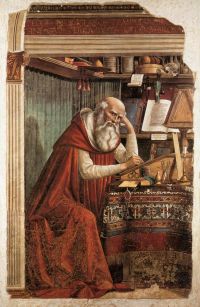
Portrait of Jerome Jerome Vulgate Prologue — Free Bible

The book of numbers, does it not contain many mysteries of the whole craft of numbers, and the prophecy of Balaam, and of 42 dwellings in the wilderness? Deuteronomy, truly, the second law and prefigures the law of the gospel, doesn't it, while containing the things that are before, nevertheless show all old things anew? This far the five books of Moses last, that I call the Pentateuch, these are the "five words" that the apostle glories himself, that he has the will to speak them in the church. Job, who is an example of patience, doesn't he knit mysteries with his word?
Source: Wikisource

Portrait of Jerome Jerome Vulgate Prologue — Free Bible

Paul the apostle joys that he himself had learned the law of Moses and the prophets at the feet of Gamaliel, that he could, armed with spiritual darts, speak trustingly "the weapons of our war are not carnal things but things mighty in god to cast down strongholds; that we overthrow evil thoughts and every high thing that exalts itself against the knowledge of God, and bring into captivity all understanding to obey Christ, and ready to take vengeance on all disobedience."
Source: Wikisource

Portrait of Jerome Jerome Vulgate Prologue — Free Bible

I will come to the lesser crafts, which aren't ministered only with the tongue, but also with the hands; as farmhands, masons, metal smiths, carpenters, makers of woolen cloth, fullers, [10] and others that forge, or make, various furniture, and cheap utensils; they can't be all that they desire without a teacher. Doctors profess that that is of the medical profession, smiths treat that that can be smithed; but the craft of holy scripture is the only science, that all men profess. "We all write poetic sayings, both learned and unlearned."
Source: Wikisource

Get perspective with Kwize: daily news enlightened by great literature