Summary

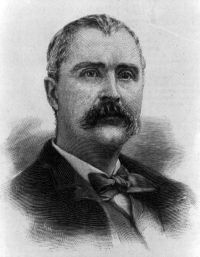
Portrait of John Boyle O'Reilly John Boyle O'Reilly Moondyne — Sir Joshua Hobb's Convict Mill (1879)

The quality that is absent in the criminal class is order, Sir, order; and this can best be supplied by persistent and impersonal regularity of work, meals, exercise, and sleep."
"You subject all prisoners to the same course of treatment?" asked Sheridan.
"Precisely," answered Sir Joshua. Our system is the measure of normality, Sir. We make the entire criminal or, abnormal class pass through the same process of elevation, and try to reach one standard."
Source: Wikisource

Portrait of John Boyle O'Reilly John Boyle O'Reilly Moondyne — Sir Joshua Hobb's Convict Mill (1879)

Sheridan kept the appointment, and became acquainted with the half-dozen men to whose hands Great Britain had intrusted the vast burden of punishing and reforming the criminal class.
Half an hour's conversation, though of a general nature, astonished Will Sheridan, by convincing him of the stupendous conceit and incompetence of these men. They talked glibly about the weight of a prisoner's loaf, and the best hour to light the cells in the morning; they had statistics at their finger-ends to show how much work a convict could perform on a given number of ounces of meat
Source: Wikisource

Portrait of John Boyle O'Reilly John Boyle O'Reilly Moondyne — Sir Joshua Hobb's Convict Mill (1879)

The criminal body is diseased—our system is the cure, sir; physician and cure in one."
Accustomed to say the word he meant, Will Sheridan could hardly restrain an indignant comment. "Confound the man," he thought, "he would take a hundred men, with as many diseases, and treat them all for the cholera." He concluded that Sir Joshua would have earned distinction as a torturer as well as a reformer, but he did not say so.
Source: Wikisource

Get perspective with Kwize: daily news enlightened by great literature