Summary

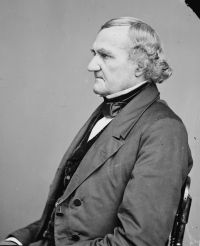
Portrait of John Catron John Catron Gwin v. Breedlove (43 U.S. 29)…

So in the state courts, nothing is more common than to proceed by attachment against the sheriff, instead of resorting to a summary motion, for judgment against him by force of a statute, where he withholds moneys collected. The marshal's bond is for twenty thousand dollars; the sureties are bound to this amount only; and if no other remedy existed save on the bond, after the penalty was exhausted, he might set the court at defiance; the marshal could also be sued in assumpsit, by the plaintiff in the execution.
Source: Wikisource

Portrait of John Catron John Catron Gwin v. Breedlove (43 U.S. 29)…

In our opinion, the act of Mississippi authorizing a judgment by motion, against a sheriff for failing to pay over moneys collected on execution, to the party on demand, or into court at the return day, was adopted by the act of 1828, and does apply in a case like the present, as a mode of proceeding in the courts of the United States, held in the district of Mississippi; and could be enforced against the marshal in like manner it could be against a sheriff in a state court.
Source: Wikisource

Portrait of John Catron John Catron Gwin v. Breedlove (43 U.S. 29)…

By the Constitution of the United States (section ten) gold or silver coin made current by law can only be tendered in payment of debts: Nevertheless, if the debtor pays bank-notes, which are received by the creditor in discharge of the contract, the payment is just as valid as if gold or silver had been paid. Had March paid his creditor Breedlove in the manner he did the marshal, then there can be no doubt Breedlove could not have treated the payment as a nullity, and on this assumption have issued an execution on his judgment, and enforced payment again in specie.
Source: Wikisource

Get perspective with Kwize: daily news enlightened by great literature