Summary

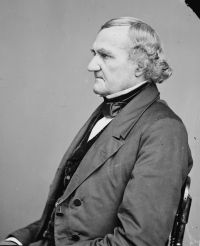
Portrait of John Catron John Catron McEwen v. Den — Opinion of the Court

It is next insisted that the act of 1856, being an amendment of the act of 1839, carries with it the provisions of this law. The act of 1856 declares, that the act of 1839 'be so amended' that all deeds, powers of attorney, &c., proved or acknowledged before a foreign clerk, may be registered, and have full effect. An additional mode of probate is provided; nor does the act go any further.
The deed offered in evidence was recorded without legal proof of its execution; and, therefore, a copy of the record could not be evidence. The court erred in admitting the copy to go to the jury.
Source: Wikisource

Portrait of John Catron John Catron McEwen v. Den — Opinion of the Court

In ascertaining the southwest corner of the tract at 894 poles from the poplar corner, the mode of measuring will be to level the chain, as is usual with chain-carriers when measuring up and down mountain sides, or over other steep acclivities or depressions, so as to approximate, to a reasonable extent, horizontal measurement, this being the general practice of surveying wild lands in Tennessee.
Source: Wikisource

Portrait of John Catron John Catron McEwen v. Den — Opinion of the Court

The main question in the cause turns on the fact, whether the possession at Evans's coal bank was within the boundary of the grant No. 22,261, described in the declaration, and alone relied on at the trial by the plaintiff. It calls to begin on the south bank of Coal creek, four poles below Bowling's mill; thence running south with the foot of Walden's ridge, 894 poles, to a stake at letter H, in Henderson & Co.'s Clinch river survey; then west, crossing Walden's ridge, 894 poles to a stake; thence north 894 poles to a stake; then a direct line to the beginning.
Source: Wikisource

Get perspective with Kwize: daily news enlightened by great literature