Summary

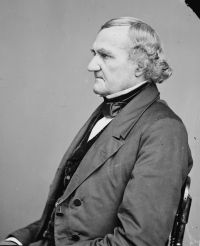
Portrait of John Catron John Catron Northern Indiana Railroad Company v…

Powerless and vain as probably ever will be the 'still small voice' of an humble individual, in opposition to the united declaration of those justly considered the learned and the wise, still, under the most solemn conviction of duty, the effort can never be forborne to raise that humble voice in accents of alarm at whatever is believed to threaten even the sacred bark in which the safety both of the States and of the United States is freighted. I hold that, beyond the Constitution of the United States, there is no federal government, either in the mass or in the detail.
Source: Wikisource

Portrait of John Catron John Catron Northern Indiana Railroad Company v…

We are told, by the English jurists, and by the decisions of the English courts, and so, too, in the case of the Bank of the United States v. Devereux, it is laid down by Marshall, C.J., that a corporation is an invisible, intangible, artificial creature. In one sense, at least, the citizen may render himself invisible and intangible-he may abscond. In what signification he must become artificial, amongst the infinite varieties which may be imagined, will present a question more difficult to be determined.
Source: Wikisource

Portrait of John Catron John Catron Northern Indiana Railroad Company v…

A corporation is composed of many individual members, having a joint interest, and a joint right to sue in their corporate name; and the consideration here presented is, whether a State law, creating the corporation, makes such corporation 'a citizen,' according to the Constitution, regardless of the fact where its members reside. If the corporation be such citizen, then every member of the corporate body might reside in Michigan, and yet have the right to sue citizens of Michigan there in the United States court.
Source: Wikisource

Get perspective with Kwize: daily news enlightened by great literature