Summary

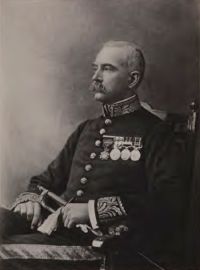
Portrait of John Claude White John Claude White Sikhim and Bhutan — Chapter XVIII … (1909)

We reached our camping-ground about 3 P.M., a lovely open spot in the midst of larch and spruce, with magnificent views both up and down the valley, and found our heavy baggage waiting for us. Sorting out the tents was rather a difficult task, as the coolies had thrown everything in a heap, but we soon got things into fair order, and had a roaring fire made in the middle of the camp, round which we all sat and made ourselves comfortable, although a good deal of our baggage did not arrive till midnight.
Source: Wikisource

Portrait of John Claude White John Claude White Sikhim and Bhutan — Chapter XVIII … (1909)

Paro-jong, one of the finest forts in Bhutan, which I have already described, had been burnt to the ground a few weeks previously, and was now a heap of blackened ruins, with only a few walls standing up gaunt and melancholy. Although the ruins were still smouldering, preparations for rebuilding had already commenced, and the débris was being removed and new timber collected, an arduous task in these hills, especially as enormous beams are used in all Bhutanese construction. They also use a quite unnecessary amount, and make their floors far too thick.
Source: Wikisource

Portrait of John Claude White John Claude White Sikhim and Bhutan — Chapter XVIII … (1909)

All our provisions in the bungalow, milk, tea, meat even, were frozen solid, and no fire would thaw them; no water was to be had, only chunks of ice; and it was almost impossible to keep warm. The wind was still blowing a hurricane, and the
mule-drivers refused to start, saying that no animal could stand against the force of the wind and the bitter cold, so we were perforce obliged to remain where we were and listen to the wind roaring through the trees.
Source: Wikisource

Get perspective with Kwize: daily news enlightened by great literature