Summary

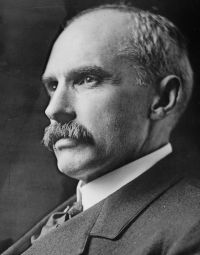
Portrait of John Cotton Dana John Cotton Dana,  A Library Primer — Chapter XXII, Expansive classification (1899)

“ The classification
Those who have used it call it common-sense and up-to-date. They say that it is clear and easy to apply, and that it gives a suitable place for many classes of books for which other systems make no provision, or provide badly. It has been maturing for 20 years. Before it was printed it was applied (with a different notation) to the arrangement of a library of over 150,000 v. The experience thus gained has been supplemented as each part was prepared for the press by searching catalogs, bibliographies, and treatises on the subject classified.
”
Source: Wikisource

Portrait of John Cotton Dana John Cotton Dana,  A Library Primer — Chapter XXII, Expansive classification (1899)

“ The same notation is used throughout, so that a library can adopt the fuller classification with the least possible change of mark.
It often suggests alternative places for a subject, stating the reasons for and against each, so that classifiers have a liberty of choice according to the character of their libraries, or of their clientage, or their own preferences.
”
Source: Wikisource

Portrait of John Cotton Dana John Cotton Dana,  A Library Primer — Chapter XXII, Expansive classification (1899)

“ The first part of the classification, as published, contains the first six classifications and a combined index to them all. The seventh, the fullest classification, will have 10 sections. Five of them are published, each with its own index. Of two (Social sciences and Language and literature) about half is published. When these and the other three (Natural sciences, Industrial arts, Recreative and fine arts) are printed, a full index to the whole will be made. ”
Source: Wikisource

Get perspective with Kwize: daily news enlightened by great literature