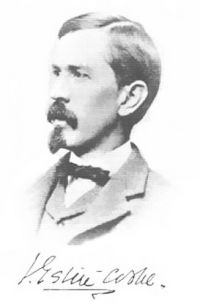
John Esten Cooke

John Esten Cooke

Summary

Portrait of John Esten Cooke John Esten Cooke Wearing of the Gray (1867)

From the moment when he took command of that famous corps, a new system of artillery fighting seemed to be inaugurated. The rapidity, the rush, the impetus of the cavalry, were grafted on its more deliberate brother. Not once, but repeatedly, has the Horse Artillery of Pelham given chase at full speed to a flying enemy; and, far in advance of all infantry support, unlimbered and hurled its thunders on the foe. It was ever at the point where the line was weakest; and however headlong the charge of the cavalry, the whirling guns were beside it, all ready for their part.
Source: Wikisource

Portrait of John Esten Cooke John Esten Cooke Wearing of the Gray (1867)

In all those hard combats, no ball or shell ever struck him. The glance of the blue eyes seemed to conquer Danger, and render Death powerless. He seemed to bear a charmed life, and to pass amid showers of bullets without peril or fear of the result. It was not from the enemy's artillery alone that he ran the greatest danger in battle. He was never content to remain at his guns if they were silent. His mind was full of the contest, pondering its chances, as though he had command of the whole army himself; he never rested in his exertions to penetrate the designs of the enemy.
Source: Wikisource

Portrait of John Esten Cooke John Esten Cooke Wearing of the Gray (1867)

With an inborn genius for war which West Point had merely developed, and directed in its proper channels, he had that rapid comprehension intuition almost which counts for so much in a leader. Where the con test was hottest and the pressure heaviest, there was Pelham with his guns ; and the broken lines of infantry, or cavalry giving ground before irresistible numbers, heard their deep voices roaring and saw the ranks of the enemy scattered.
Source: Wikisource

Get perspective with Kwize: daily news enlightened by great literature