Summary

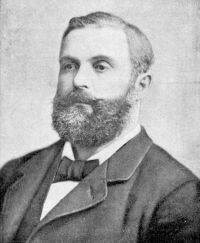
Portrait of Thomas W. Knox Thomas W. Knox Decisive Battles Since Waterloo… (1902)

His father intended him for a merchant, but he felt an irresistible longing for religious studies, which resulted in an uncontrollable dislike to the Hindoo, the Moslem, and the Bhuddist forms of worship. He taught the unity of God, the equality of all in the sight of heaven, and inculcated universal kindness, charity, and forbearance among men.
Source: Wikisource

Portrait of Thomas W. Knox Thomas W. Knox Decisive Battles Since Waterloo… (1902)

The progress of the new faith was steady, though in its early history it met with much opposition; for four centuries the Sikhs contended with the enemies that surrounded them, and gradually increased their power over the neighboring states. They were emphatically a soldier race, and in the early part of the present century, under the leadership of Runjeet Singh, "The Lion of the Punjaub" the Sikh Confederacy included a population of seven million, with an army of eighty thousand men, possessing three hundred guns.
Source: Wikisource

Portrait of Thomas W. Knox Thomas W. Knox Decisive Battles Since Waterloo… (1902)

Late in January, 1846, occurred the battle of Aliwal, and on the 10th of February, the battle of Sobraon, where the Sikhs had an intrenched camp of thirty thousand men with one hundred and seventy guns. The camp was on both sides of the river, and connected by a bridge. The British attacked the camp on the south side, and were desperately resisted by the Sikhs, who inflicted a loss of nearly three thousand men on their assailants. The battle resulted in a British victory, and a loss to the Sikhs of ten thousand men and sixty-seven pieces of artillery, mostly of heavy calibre.
Source: Wikisource

Get perspective with Kwize: daily news enlightened by great literature