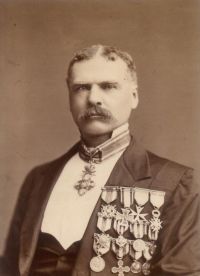
Runjeet Singh

Definition and stakes

Mowbray Morris,  The First Afghan War

“ Escorted by the principal military and political English officers, Runjeet Singh rode up on his elephant through a splendid guard of honour, amid the thunder of artillery and the clash of innumerable bands, to the Durbar tent. Lord Auckland and Sir Henry Fane rode out to meet him, and as the two cavalcades joined such was the crush and uproar that many of the Sikh chiefs, thinking there was some design afoot on their prince, began "to blow their matches and grasp their weapons with a mingled air of distrust and ferocity." ”
Source: Gutenberg

J. N. Larned,  History for ready reference, Volume 3… (1895)

“ The heir of Runjeet might have been ridiculed by the Sikhs as a Christian, but he might also have been accepted as a reconverted man; and one successful skirmish in a district might have called to arms all the 'children of the sugar and the sword,' and set all India on fire. The Sikhs are our very good friends, and stood by us against any revival of the Empire of Delhi, their sworn hereditary foe; but they have not forgotten Runjeet Singh, and a chance of the Empire for themselves might have turned many of their heads." The Spectator, October 28, 1893. ”
Source: Gutenberg

Sir John William Kaye,  History of the War in Afghanistan…

“ Then Runjeet was escorted to another tent, where specimens of British ordnance, caparisoned elephants, and horses of noble figure, stood ready for his Highness’s acceptance. All these were inspected with due expressions of admiration and a becoming interchange of courtesies; and then, amidst an uproar of hurras, a crash of military music, and another scene of indescribable confusion, Runjeet Singh ascended his elephant and turned his back upon the British camp. ”
Source: Gutenberg

Get perspective with Kwize: daily news enlightened by great literature