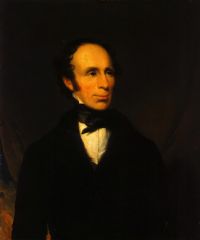
W. S. R. Hodson

Biographical details

W. S. R. Hodson,  Twelve Years of a Soldier's Life in India

“ The creeds of the party are as varied as their colors; and that's saying a good deal, when you contrast my white face and yellow hair with Sir Henry's nut-brown, the pale white parchmenty-color of the Kashmeree, the honest brunette tinge of the tall Sikh, the clear olive-brown of the Rajpoot, down through all shades of dinginess to the deep black of the low-caste Hindoo. I am one of the whitest men in India, I fancy, as, instead of burning in the sun, I get blanched like endive or celery. ”
Source: Gutenberg

W. S. R. Hodson,  Twelve Years of a Soldier's Life in India

“ I have seen a great deal of the native Sirdars or chiefs, especially Tej Singh who commanded the Sikh forces in the war, and of the Maharaja. The former a small, spare little man, marked with the smallpox, and with a thin and scanty beard, but sharp and intelligent, and by his own account a hero. The Maharaja is a fine, tall, portly man, with a splendid expressive face, and most gentlemanly, pleasing manner, and fine-toned voice,—altogether the most pleasing Asiatic I have seen,—to all appearance the gentlest of the gentle, and the most sincere and truthful character in the world ”
Source: Gutenberg

W. S. R. Hodson,  Twelve Years of a Soldier's Life in India

“ Then the multitudes of camels, horses, and elephants, in all imaginable groups and positions,—the groans and cries of the former as they stoop and kneel for their burdens, the neighing of hundreds of horses mingling with the shouts of the innumerable servants and their masters' calls, the bleating of sheep and goats, and louder than all, the shrill screams of the Hindoo women, almost bewilder one's senses as one treads one's way through the canvas streets and squares to the place where the regiment assembles outside the camp. ”
Source: Gutenberg

Get perspective with Kwize: daily news enlightened by great literature