Summary

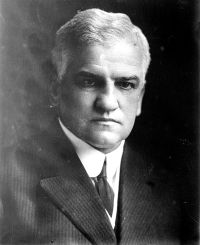
Portrait of John Hessin Clarke John Hessin Clarke Chesapeake Delaware Canal Company v…

The company, without introducing any testimony, relied wholly upon this presumption of payment.
Although the burden of the responsibility of proving nonpayment was accepted by the government, the Canal Company, nevertheless, argues that the state statute of limitations is also applicable.
It is settled beyond controversy that the United States when asserting 'sovereign' or governmental rights is not subject to either state statutes of limitations or to laches.
Source: Wikisource

Portrait of John Hessin Clarke John Hessin Clarke Chesapeake Delaware Canal Company v…

To this must be added that the statutes and rules of limitation relate to the remedy to enforce the right, and not to the corporate relation from which the right springs, and that, since these dividends constituted 'public money' applicable to public purposes only, the government in collecting them was acting in its governmental capacity as much as if it were collecting taxes, such as those with which, no doubt, the stock which produced the dividends was purchased.
Source: Wikisource

Portrait of John Hessin Clarke John Hessin Clarke Chesapeake Delaware Canal Company v…

That the United States is not bound by state statutes of limitations is settled with equal definiteness in United States v. Nashville, etc., Ry. Co., 118 U.S. 120, 6 Sup. Ct. 1006, 30 L. Ed. 81; United States v. Whited & Wheless, 246 U.S. 552, 561, 38 Sup. Ct. 367, 62 L. Ed. 879.
Whether this rule extends to and includes the presumption of payment arising from the lapse of twenty years without suit to collect is not questioned by appropriate exceptions in the record before us, and it is, therefore, not decided.
Source: Wikisource

Get perspective with Kwize: daily news enlightened by great literature