Summary

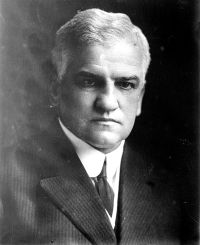
Portrait of John Hessin Clarke John Hessin Clarke Crane v. Hahlo — Opinion of the Court

The Court of Appeals declares that the theory of the amendment is well understood to be 'the policy that the greater good is sometimes secured by making certain classes of decisions final and ending litigation, even though in a particular case the individual is prevented by review from correcting some error which has injured him.'
It may not be an undiluted evil to the real parties in interest to this litigation, which has been pending in various forms for nearly 30 years, to have it brought to an end and to have the large award allowed in 1918 divided among them.
Source: Wikisource

Portrait of John Hessin Clarke John Hessin Clarke Crane v. Hahlo — Opinion of the Court

The amendment of 1918, following an earlier amendment in 1901, gave to the plaintiff in error the right to have the award of the board of assessors reviewed by the board of review of assessments, which her intestate did not have when the viaduct was constructed, and, while the amendment of 1918 made the finding of the latter conclusive as to the 'amount of damages sustained,' it retained the right to review in the courts the entire finding whenever lack of jurisdiction, or fraud, or willful misconduct on the part of the members of the board should be asserted.
Source: Wikisource

Portrait of John Hessin Clarke John Hessin Clarke Crane v. Hahlo — Opinion of the Court

It is argued far from confidently, that this invasion of constitutional right arises from the fact that the board of revision of assessments, having final jurisdiction over the amount of the damages suffered by the intestate of the plaintiff in error, is composed of three city officials, appointed by the mayor, with power to pass on claims against it and that this denies to her an impartial tribunal.
Source: Wikisource

Get perspective with Kwize: daily news enlightened by great literature