Summary

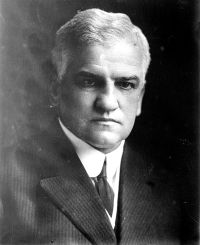
Portrait of John Hessin Clarke John Hessin Clarke Thomas Cusack Company v. City of Chicago…

The plaintiff in error cannot be injured, but obviously may be benefited, by this provision, for without it the prohibition of the erection of such billboards in such residence sections is absolute. He who is not injured by the operation of a law or ordinance cannot be said to be deprived by it of either constitutional right or of property.
Source: Wikisource

Portrait of John Hessin Clarke John Hessin Clarke Thomas Cusack Company v. City of Chicago…

The claimed infirmity in the ordinance consists in the requirement that before any billboard or signboard of over 12 square feet in area may be erected in any block in which one half of the buildings are used exclusively for residence purposes, the owners of a majority of the frontage of the property on both sides of the street in such block shall consent in writing thereto.
Source: Wikisource

Portrait of John Hessin Clarke John Hessin Clarke Thomas Cusack Company v. City of Chicago…

To this we may add that such a reference to a neighborhood of the propriety of having carried on within it trades or occupations which are properly the subject of regulation in the exercise of the police power is not uncommon in laws which have been sustained against every possible claim of unconstitutionality, such as the right to maintain saloons (Swift v. People, 162 Ill. 534, 33 L.R.A. 470, 44 N. E. 528) , and as to the location of garages (People ex rel. Busching v. Ericsson, 263 Ill. 368, L.R.A.1915D, 607, 105 N. E. 315, Ann. Cas. 1915C, 183) .
Source: Wikisource

Get perspective with Kwize: daily news enlightened by great literature