Summary

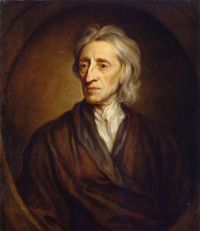
Portrait of John Locke John Locke An Essay Concerning Human Understanding…

For those being combinations of simple ideas put together, and united under one general name, it is plain that the mind of man uses some kind of liberty in forming those complex ideas : how else comes it to pass that one man’s idea of gold, or justice, is different from another’s, but because he has put in, or left out of his, some simple idea which the other has not ? The question then is, Which of these are real, and which barely imaginary combinations ? What collections agree to the reality of things, and what not ?
Source: Wikisource

Portrait of John Locke John Locke An Essay Concerning Human Understanding…

For, these several appearances being designed to be the mark whereby we are to know and distinguish things which we have to do with, our ideas do as well serve us to that purpose, and are as real distinguishing characters, whether they be only constant effects, or else exact resemblances of something in the things themselves : the reality lying in that steady correspondence they have with the distinct constitutions of real beings. But whether they answer to those constitutions, as to causes or patterns, it matters not ; it suffices that they are constantly produced by them.
Source: Wikisource

Portrait of John Locke John Locke An Essay Concerning Human Understanding…

These ideas themselves, being archetypes, cannot differ from their archetypes, and so cannot be chimerical, unless any one will jumble together in them inconsistent ideas. Indeed, as any of them have the names of a known language assigned to them, by which he that has them in his mind would signify them to others, so bare possibility of existing is not enough ; they must have a conformity to the ordinary signification of the name that is given them, that they may not be thought fantastical : as if a man would give the name of justice to that idea which common use calls liberality.
Source: Wikisource

Get perspective with Kwize: daily news enlightened by great literature