Summary

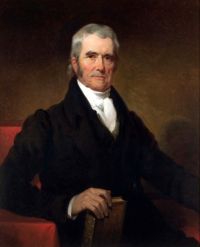
Portrait of John Marshall John Marshall Boyce v. Anderson — Opinion of the Court

Being left at liberty, he may escape. The carrier has not, and cannot have, the same absolute control over him, that he has over inanimate matter. In the nature of things, and in his character, he resembles a passenger, not a package of goods. It would seem reasonable, therefore, that the responsibility of the carrier should be measured by the law which is applicable to passengers, rather than by that which is applicable to the carriage of common goods.
Source: Wikisource

Portrait of John Marshall John Marshall Boyce v. Anderson — Opinion of the Court

The law applicable to common carriers is one of great rigour. Though to the extent to which it has been carried, and in the cases to which it has been applied, we admit its necessity and its policy, we do not think it ought to be carried farther, or applied to new cases. We think it has not been applied to living men, and that it ought not to be applied to them.
The directions given by the court to the jury informed them, that the defendants were responsible for negligence or unskilful conduct, but not otherwise.
Source: Wikisource

Get perspective with Kwize: daily news enlightened by great literature