Summary

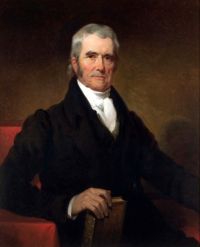
Portrait of John Marshall John Marshall Fowle v. Lawrason's Executor — Opinion of the Court

That a court of chancery has jurisdiction in matters of account cannot be questioned, nor can it be doubted that this jurisdiction is often beneficially exercised; but it cannot be admitted that a court of equity may take cognizance of every action, for goods, wares and merchandize sold and delivered, or of money advanced, where partial payments have been made, or of every contract, express or implied, consisting of various items, on which different sums of money have become due and different payments have been made.
Source: Wikisource

Portrait of John Marshall John Marshall Fowle v. Lawrason's Executor — Opinion of the Court

In all cases in which an action of account would be the proper remedy at law, and in all cases where a trustee is a party, the jurisdiction of a court of equity is undoubted. It is the appropriate tribunal. But in transactions not of this peculiar character, great complexity ought to exist in the accounts, or some difficulty at law should interpose, some discovery should be required, in order to induce a court of chancery to exercise jurisdiction.
Source: Wikisource

Portrait of John Marshall John Marshall Fowle v. Lawrason's Executor — Opinion of the Court

The plaintiff sues on a contract by which real property is leased to the defendant, and admits himself to be in full possession of all the testimony he requires to support his action. The defendant opposes to this claim as an offset, a sum of money due to him for goods sold and delivered, and for money advanced; no item of which is alleged to be contested. We cannot think such a case proper for a court of chancery.
Source: Wikisource

Get perspective with Kwize: daily news enlightened by great literature