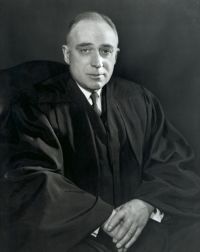
John Marshall Harlan II

John Marshall Harlan II

Summary

Portrait of John Marshall Harlan II John Marshall Harlan II Fortson v. Toombs — Dissent

Can there be the slightest constitutional doubt that a State may lodge the power to initiate constitutional changes in any select body it pleases, such as a committee of the legislature, a group of constitutional lawyers, or even a 'malapportioned' legislature-particularly one whose composition was considered, prior to this Court's reapportionment pronouncements of June 15, 1964, to be entirely and solely a matter of state concern?
Source: Wikisource

Portrait of John Marshall Harlan II John Marshall Harlan II Fortson v. Toombs — Dissent

The Court's reapportionment decisions have pressed district courts onto an uncharted and highly sensitive field of federal-state relations with little more to guide them than the elusive 'one-person-one-vote' aphorism. District courts, as courts of first instance, must necessarily fashion remedies for themselves, and the passage of time and the variety of remedies chosen by them may ultimately help this Court to wend its way through this treacherous constitutional terrain.
Source: Wikisource

Portrait of John Marshall Harlan II John Marshall Harlan II Fortson v. Toombs — Dissent

Interstate Commerce Comm., 219 U.S. 498, 514-515, 31 S.Ct. 279, 283, 55 L.Ed. 310.↑ If, as I believe, a State is not federally restricted in its choice of means for initiating constitutional change, the question of whether, under Georgia law, the proposed new Georgia Constitution should have been initiated by a popularly elected convention instead of by the legislature is not a matter for federal cognizance.↑ To hold as I think the Court should on these issues would not in any way impair the federal courts' ability to prevent frustration of their reapportionment decrees.
Source: Wikisource

Get perspective with Kwize: daily news enlightened by great literature