Summary

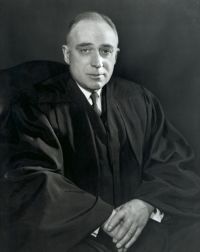
Portrait of John Marshall Harlan II John Marshall Harlan II Gideon v. Wainwright — Concurring Opinion

In agreeing with the Court that the right to counsel in a case such as this should now be expressly recognized as a fundamental right embraced in the Fourteenth Amendment, I wish to make a further observation. When we hold a right or immunity, valid against the Federal Government, to be "implicit in the concept of ordered liberty" [6] and thus valid against the States, I do not read our past decisions to suggest that, by so holding, we automatically carry over an entire body of federal law and apply it in full sweep to the States.
Source: Wikisource

Portrait of John Marshall Harlan II John Marshall Harlan II Gideon v. Wainwright — Concurring Opinion

Even by the time of the Betts decision, dictum in at least one of the Court's opinions had indicated that there was an absolute right to the services of counsel in the trial of state capital cases. [1] Such dicta continued to appear in subsequent decisions, [2] and any lingering doubts were finally eliminated by the holding of Hamilton v. Alabama, 368 U.S. 52.
In noncapital cases, the "special circumstances" rule has continued to exist in form while its substance has been substantially and steadily eroded.
Source: Wikisource

Get perspective with Kwize: daily news enlightened by great literature