Summary

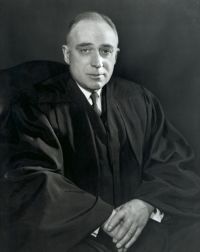
Portrait of John Marshall Harlan II John Marshall Harlan II Henry v. Mississippi (379 U.S. 443…

Thus the state interest which so powerfully supports the contemporaneous-objection rule is that of maximizing correct decisions and concomitantly minimizing errors requiring mistrials and retrials. The alternative for the State is to reverse a trial judge who, from a long motion, fails to pick out and act with remarkable imagination upon a single vague sentence relating to admissibility of evidence long since admitted. A trial judge is a decision-maker, not an advocate.
Source: Wikisource

Portrait of John Marshall Harlan II John Marshall Harlan II Henry v. Mississippi (379 U.S. 443…

As every trial lawyer of any experience knows, motions for directed verdicts are generally made as a matter of course at the close of the prosecution's case, and are generally denied without close consideration unless the case is clearly borderline. It is simply unrealistic in this context to have expected the trial judge to pick out the single vague sentence from the directed verdict motion and to have acted upon it with the refined imagination the Court would require of him.
Source: Wikisource

Portrait of John Marshall Harlan II John Marshall Harlan II Henry v. Mississippi (379 U.S. 443…

To me this would not be a move toward 'harmonious' federalism; any further disrespect for state procedures, no longer cognizable at all in federal habeas corpus, would be the very antithesis of it. While some may say that, given Fay v. Noia, what the Court is attempting to do is justifiable as a means of promoting 'efficiency' in the administration of criminal justice, it is the sort of efficiency which, though perhaps appropriate in some watered-down form of federalism, is not congenial to the kind of federalism I had supposed was ours.
Source: Wikisource

Get perspective with Kwize: daily news enlightened by great literature