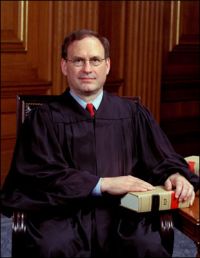
 Samuel Alito,
Wong v. Smith — Dissent (slip opinion - see disclaimer…
Samuel Alito,
Wong v. Smith — Dissent (slip opinion - see disclaimer…
“ For centuries, trial judges have enjoyed authority to comment on the evidence. At common law, the judge was empowered to "weig [h] the evidence" and share an "opinion" with the jury, even "in matter of fact." 2 M. Hale, History of the Common Law of England 147 (5th ed. 1794) (hereinafter Hale) . [*] The practice is well established in this Court's cases as well. The Court has recognized that a trial judge has "discretion" to "comment upon the evidence," to call the jury's "attention to parts of it which he thinks important," and to "express his opinion upon the facts." ”
