Summary

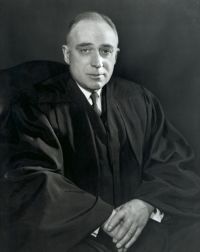
Portrait of John Marshall Harlan II John Marshall Harlan II Miner v. Atlass — Opinion of the Court

We deal here only with the procedure before us, and our decision is based on its particular nature and history. Discovery by deposition is at once more weighty and more complex a matter than either of the examples just discussed or others that might come to mind. Its introduction into federal procedure was one of the major achievements of the Civil Rules, and has been described by this Court as 'one of the most significant innovations' of the rules.
Source: Wikisource

Portrait of John Marshall Harlan II John Marshall Harlan II Miner v. Atlass — Opinion of the Court

Moreover, the choice of procedures adopted to govern various specific problems arising under the system was in some instances hardly less significant than the initial decision to have such a system. It should be obvious that we are not here dealing either with a bare choice between an affirmative or a negative answer to a narrow question, or even less with the necessary choice of a rule to deal with a problem which must have an answer, but need not have any particular one.
Source: Wikisource

Portrait of John Marshall Harlan II John Marshall Harlan II Miner v. Atlass — Opinion of the Court

Unlike many state practice statutes, this Court's rules of admiralty practice for the District Courts are not comprehensive codes regulating every detail of practice, and we would be slow to hold that the interstices may not be the subject of appropriate local regulation. For example, rules fixing the time for doing certain acts are of the essence of orderly procedure. So long as the time set be not unreasonable, it is less important what the limit be than that there be a rule whereby some timetable may be known to the profession.
Source: Wikisource

Get perspective with Kwize: daily news enlightened by great literature