Summary

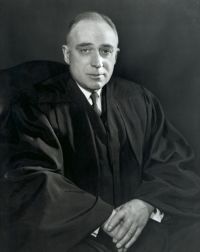
Portrait of John Marshall Harlan II John Marshall Harlan II United States v. Price (361 U.S. 304…

No persuasive reason appears for artificially engrafting upon the statutory terms excessively formal conditions. [3] Nor do we find any force in the argument that because a determination and assessment of additional deficiencies may follow upon one already made, 'the deficiency' referred to in § 272 (d) must be taken as limited to one previously determined.
Section 272 (d) does not on its face therefore support the view that a waiver of the restrictions on assessment and collection of a tax is effective only if filed after the issuance of a 90-day letter.
Source: Wikisource

Portrait of John Marshall Harlan II John Marshall Harlan II United States v. Price (361 U.S. 304…

But since, as the taxpayer acknowledges, it is inconceivable that a waiver would be effective to stop the running of interest, and at the same time be ineffective to permit the Government immediately to assess and collect the deficiency to which the waiver referred, the necessary result of respondent's reading of the Senate Committee Report would be to infer that a taxpayer was to be without power to stop the running of interest until a formal notice of deficiency had issued, often involving not inconsiderable periods of delay.
Source: Wikisource

Portrait of John Marshall Harlan II John Marshall Harlan II United States v. Price (361 U.S. 304…

Such an inference does not jibe either with the 'right' the statute gives a taxpayer to file a waiver 'at any time,' or with the purposes of the waiver provisions. Moreover, had Congress desired to require the issuance of a notice of deficiency prior to assessment and collection in all circumstances, it more likely would have accomplished that result directly, as it did in the instance of jeopardy assessments.
Source: Wikisource

Get perspective with Kwize: daily news enlightened by great literature