Summary

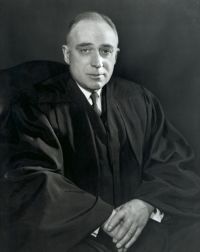
Portrait of John Marshall Harlan II John Marshall Harlan II United States v. Tateo — Opinion of the Court

While different theories have been advanced to support the permissibility of retrial, of greater importance than the conceptual abstractions employed to explain the Ball principle are the implications of that principle for the sound administration of Justice. Corresponding to the right of an accused to be given a fair trial is the societal interest in punishing one whose guilt is clear after he was obtained such a trial.
Source: Wikisource

Portrait of John Marshall Harlan II John Marshall Harlan II United States v. Tateo — Opinion of the Court

In reality, therefore, the practice of retrial serves defendants' rights as well as society's interest. The underlying purpose of permitting retrial is as much furthered by application of the rule to this case as it has been in cases previously decided.
Tateo contends that his situation must be distinguished from one in which an accused has been found guilty by a jury, since his involuntary plea of guilty deprived him of the opportunity to obtain a jury verdict of acquittal. We find this argument unconvincing.
Source: Wikisource

Get perspective with Kwize: daily news enlightened by great literature