Summary

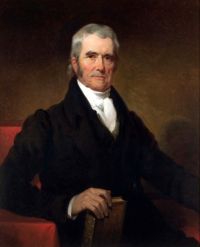
Portrait of John Marshall John Marshall Lessee of Spratt v. Spratt — Opinion of the Court

The plaintiff contends, that the word 'foreigner,' as used in the Act, designates a person born in a foreign country, and that such person does not cease to be a foreigner, by becoming a citizen of the United States. The words of the Act, therefore, apply to him, although he becomes a citizen, and enable him to take and transmit lands to his alien heirs or relations.
Source: Wikisource

Portrait of John Marshall John Marshall Lessee of Spratt v. Spratt — Opinion of the Court

It enables a foreigner to take 'in the same manner as if he was a citizen.' This language is entirely inapplicable to a citizen.
An Act to enable a citizen to take lands 'as if he were a citizen,' would be an absurdity too obvious to escape the notice of the legislature. We think, then, that a foreigner who becomes a citizen is no longer a foreigner within the view of the Act. His after purchased lands vest in him as a citizen, not by virtue of the Act of the legislature of Maryland.
The lot which he purchased while an alien, stands on different principles.
Source: Wikisource

Portrait of John Marshall John Marshall Lessee of Spratt v. Spratt — Opinion of the Court

The lessors of the plaintiff are aliens, the legitimate brothers and sisters of the said James; and the defendant, who is also an alien, is his widow; James died without issue.
James Spratt came into America in the year 1812, and became a citizen on the 11th of October, in the year 1821. He purchased one of the lots before he became a citizen, and the others afterwards.
Source: Wikisource

Get perspective with Kwize: daily news enlightened by great literature