Summary

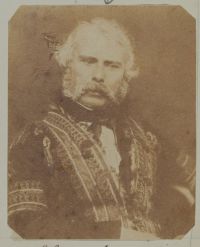
Portrait of John McCosh John McCosh Advice to Officers in India — Chapter 6 (1856)

Indeed, the management of a boat dining such a voyage, and with the appliances in use, is more precarious than that of a fine ship to England. One might imagine that nothing more was necessary than to continue to ascend and descend the stream,and he cannot go wrong; but the whole country is for three or four months of the year covered in a great measure with water and is more like an inland sea than a river without current or permanent landmark, where old channels are filled up every year, and new ones are formed
Source: Wikisource

Portrait of John McCosh John McCosh Advice to Officers in India — Chapter 6 (1856)

Then there are storms and lea-shores, and dashing waves equally formidable to the crazy craft and the primitive crew, as to a ship well manned at sea, and, what is worse, the boatmen on any emergency become panic-struck and desert the boat and the voyager at his utmost need, and worse still, the inhabitants on shore will render him no assistance. In the event of his boat's going to the bottom they will not allow him to enter their huts, no, not even their cow-houses, and he is driven to the shift of taking up his quarters in some uninhabited ruin.
Source: Wikisource

Portrait of John McCosh John McCosh Advice to Officers in India — Chapter 6 (1856)

They should always, if possible, be made fast in a creek, where shelter may be got in the event of a storm; for a boat made fast on a leashore, with a great extent of water to windward, especially if the wind be against the current, is sure to be swamped. The means in use for ascending the river are sailing and tracking. When the wind is fair and strong enough, sail is set, and thirty or forty miles are sometimes made good in one day. When there is no wind, the crew walk along the shore, and drag the boat on by a long rope made fast to the top of the mast.
Source: Wikisource

Get perspective with Kwize: daily news enlightened by great literature