Summary

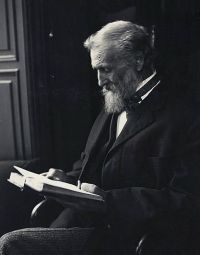
Portrait of John Muir John Muir Steep Trails — Chapter I: WILD WOOL (1918)

No matter what the circumstances of their lives may be, she never allows them to go dirty or ragged. The mole, living always in the dark and in the dirt, is yet as clean as the otter or the wave-washed seal; and our wild sheep, wading in snow, roaming through bushes, and leaping among jagged storm-beaten cliffs, wears a dress so exquisitely adapted to its mountain life that it is always found as unruffled and stainless as a bird.
Source: Wikisource

Portrait of John Muir John Muir Steep Trails — Chapter I: WILD WOOL (1918)

Orchard apples are to me the most eloquent words that culture has ever spoken, but they reflect no imperfection upon Nature's spicy crab. Every cultivated apple is a crab, not improved, BUT COOKED, variously softened and swelled out in the process, mellowed, sweetened, spiced, and rendered pulpy and foodful, but as utterly unfit for the uses of nature as a meadowlark killed and plucked and roasted.
Source: Wikisource

Portrait of John Muir John Muir Steep Trails — Chapter I: WILD WOOL (1918)

In one breed the wool is apt to wither and crinkle like hay on a sun-beaten hillside. In another, it is lodged and matted together like the lush tangled grass of a manured meadow. In one the staple is deficient in length, in another in fineness; while in all there is a constant tendency toward disease, rendering various washings and dippings indispensable to prevent its falling out. The problem of the quality and quantity of the carcass seems to be as doubtful and as far removed from a satisfactory solution as that of the wool.
Source: Wikisource

Get perspective with Kwize: daily news enlightened by great literature